- Have any questions?
- +8615220487078
- info@newstarbuilding.com

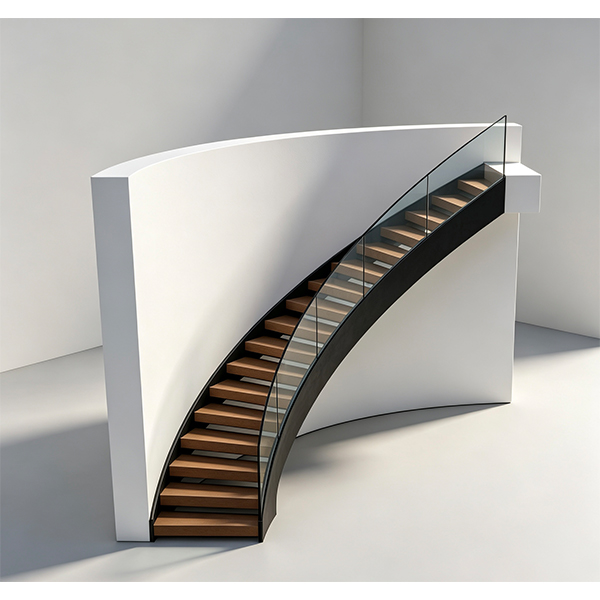
What Is a Side Stringer Staircase?
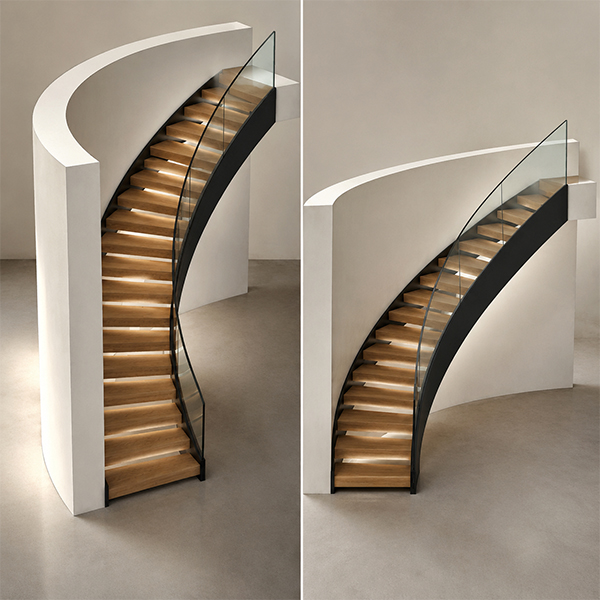
A side stringer staircase uses structural steel beams positioned along one or both sides of the stair treads instead of a traditional central support.
The stringer carries the load of each tread while leaving the underside visually open, creating a lighter and more elegant appearance.
Compared with conventional stair construction, a side stringer design offers several advantages:
- Cleaner architectural lines
- Greater openness and natural light
- Better compatibility with frameless glass railings
- Flexible customization for straight, curved, or spiral layouts
When engineered correctly, a side stringer staircase provides outstanding structural strength while maintaining a minimalist aesthetic.
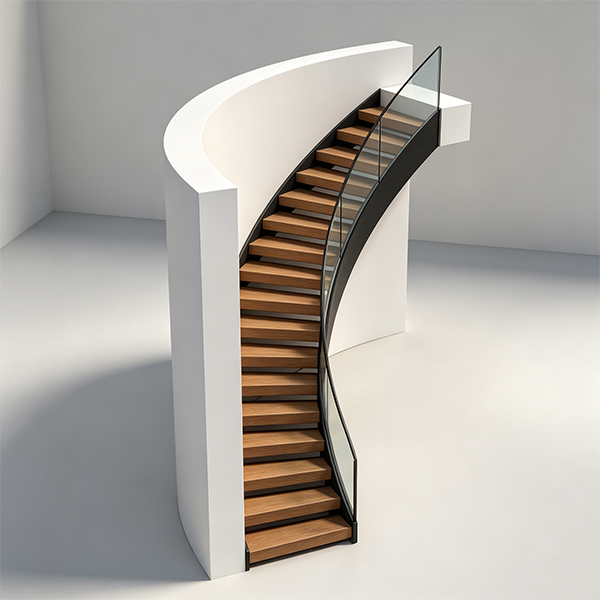
Why Are Curved Steel Stringers Becoming More Popular?
Curved staircases have become increasingly popular in modern luxury homes because they soften interior spaces and create a sense of movement.
Unlike straight staircases, a curved steel stringer introduces continuous flowing lines that naturally guide the eye through the space.
Architects often choose curved steel stringers because they:
- Create a dramatic architectural focal point
- Maximize visual flow in open-plan interiors
- Complement curved walls and organic architectural forms
- Add a custom-built appearance that cannot be achieved with standard stair systems
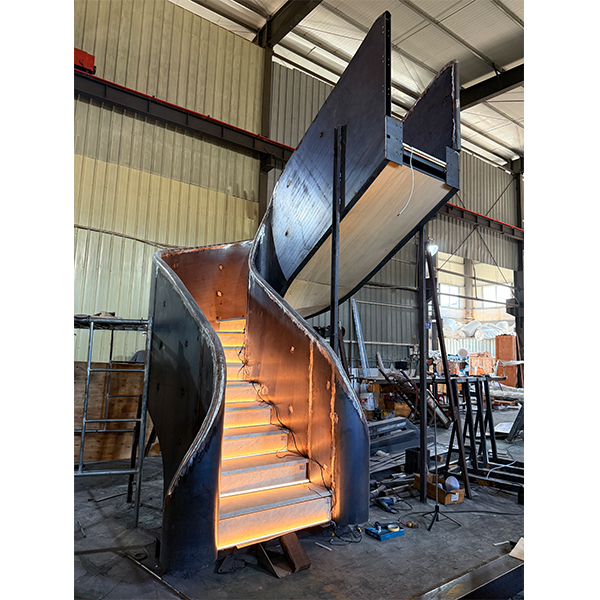
Every curved steel stringer must be individually fabricated according to the project’s geometry, making each staircase unique.
Why White Oak Is One of the Most Popular Stair Tread Materials ?
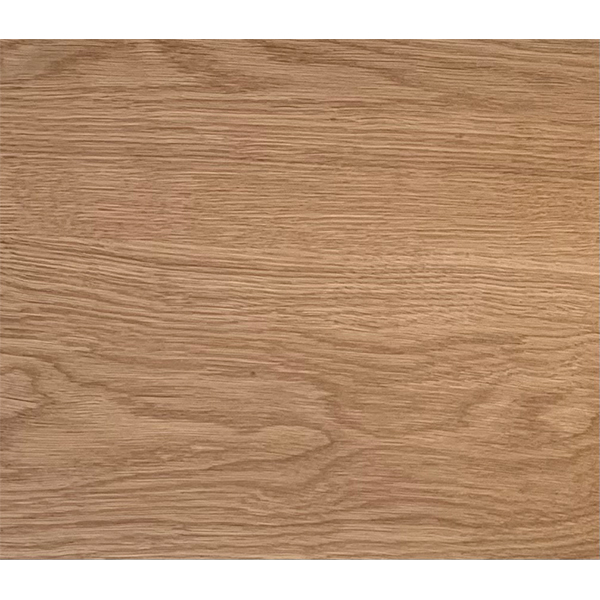
Material selection is just as important as structural design.
White oak has become one of the preferred hardwoods for premium staircases because it combines beauty with durability.
Some of its key advantages include:
Natural Warmth
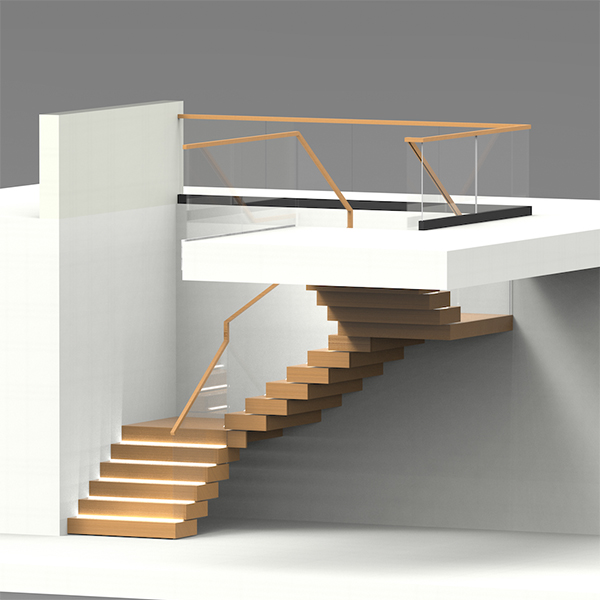
White oak introduces a warm, natural texture that balances the clean appearance of steel and glass.
Excellent Durability
Its dense grain provides excellent wear resistance, making it ideal for daily foot traffic.
Design Flexibility
White oak works beautifully with modern, Scandinavian, minimalist, and transitional interiors. It also accepts a wide range of finishes, from natural matte to darker stained tones.
Because of these qualities, white oak remains one of the most requested tread materials for custom residential staircases.
Why Frameless Glass Railings Are the Perfect Match
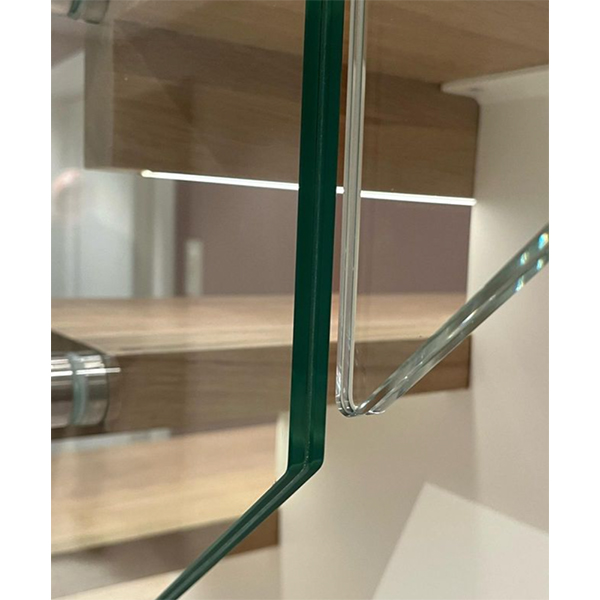
Frameless glass railings have become almost inseparable from modern side stringer staircases.
Instead of visually dividing the space, glass allows the staircase to remain open and transparent.
The benefits include:
- Maximized natural light
- Unobstructed views
- Cleaner minimalist appearance
- Increased perception of spaciousness
- Improved compatibility with modern interior architecture
When paired with a black steel side stringer and natural wood treads, frameless glass creates a timeless combination that suits a wide variety of luxury homes.
How Is a Custom Curved Staircase Designed?
Unlike standard staircases, every curved staircase begins with detailed engineering and 3D modeling.
The typical customization process includes:
1. Initial Design Consultation
The homeowner, architect, or builder provides floor plans, dimensions, and design preferences.
2. 3D Staircase Modeling
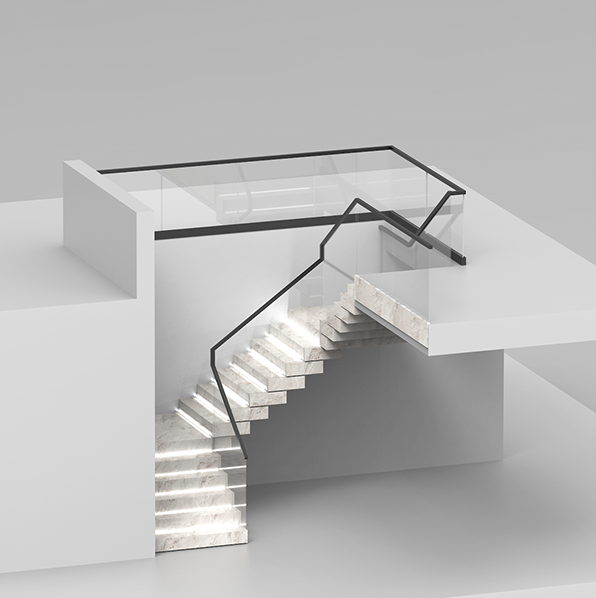
A detailed three-dimensional model is created to verify proportions, walking comfort, and structural feasibility before production begins.
3. Engineering
Structural calculations determine the steel stringer geometry, tread spacing, railing attachment, and installation method.
4. Material Selection
Clients choose finishes for the steel, hardwood species, glass type, and handrail details to match the interior design.
5. Manufacturing and Installation
After approval, the staircase is fabricated using precision steel fabrication, CNC processing, and quality-controlled finishing before delivery and installation.
Because every project has unique architectural conditions, no two curved staircases are exactly alike.
A Staircase Designed to Become the Centerpiece
A curved side stringer staircase is more than a way to move between floors.
It is an architectural statement that combines engineering, craftsmanship, and design into one seamless structure.
By combining a curved steel stringer, natural white oak treads, frameless glass railing, and carefully integrated lighting, homeowners can create a staircase that feels elegant today and remains timeless for years to come.
For architects, builders, and homeowners seeking a truly custom solution, investing in thoughtful staircase design is often one of the most impactful decisions in the entire project.
Frequently Asked Questions
Is a curved side stringer staircase structurally strong?
Yes. When professionally engineered, a curved steel side stringer provides excellent load-bearing capacity and long-term stability while maintaining a slim, elegant profile.
Can the staircase be customized?
Absolutely. Nearly every aspect—including the staircase shape, tread material, steel finish, glass railing system, lighting, and handrail design—can be tailored to suit the project.
Is white oak suitable for high-traffic homes?
Yes. White oak is highly durable, resistant to wear, and one of the most popular hardwood choices for premium residential staircases.
Can LED Staircase lighting be integrated?
Yes. LED lighting can be installed beneath the treads, along the stringer, or within adjacent walls to enhance both safety and visual impact.